Home

Member login

Subscribe to our newsletter!

Name:

Email:

Who's Online

We have 20 guests online

Search the website

Visitors Statistics

Visits [+/-]
Today:
Yesterday:
Day before yesterday:
218
294
261

+33
This week:
Last week:
Week before last week:
1329
2109
2281

-172

All visits
Since module start 112 600
Since .... 112 600
Since ......   112 600 

Polls

Which department, in your opinion, is the most corrupt in Cameron Highlands?
 
Please update your Flash Player to view content.
Welcome to R.E.A.C.H.

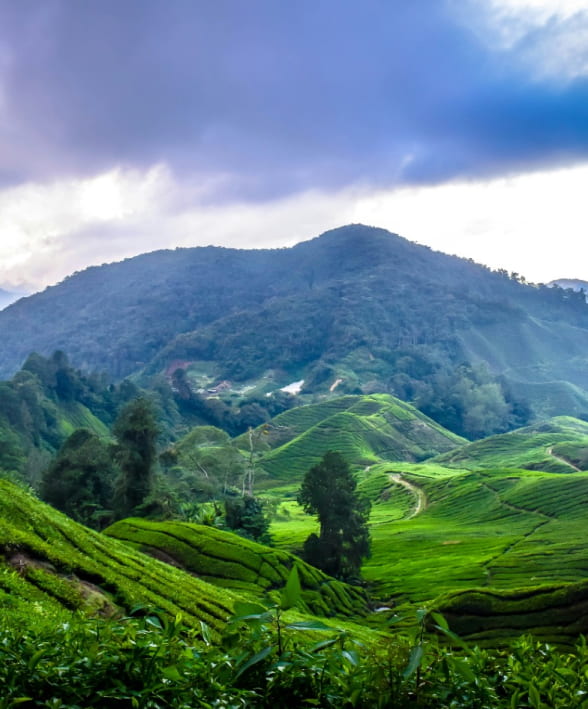
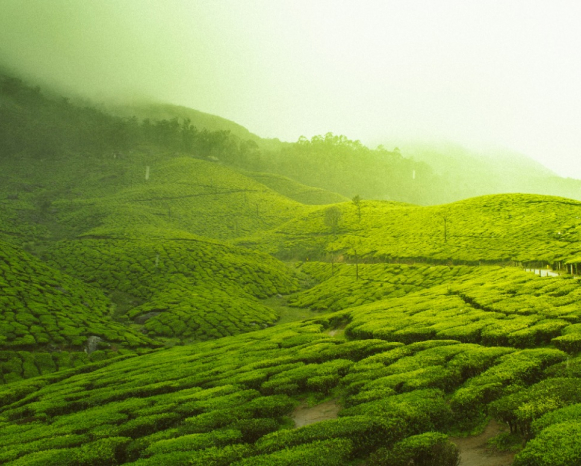
Cameron Highlands is a resort town located on the main mountain range of Peninsular Malaysia. It is a picturesque highland retreat with colonial styled bungalows cast against a backdrop of lush green forest and undulating slopes of terraced tea plantations. However, over the past two decades the rate of development has been especially rampant. While it has benefited the local economy, poor planning and enforcement have led to environmental degradation. Landslides, silted rivers and dams, constant water disruptions and poor water quality have become the norm.

R.E.A.C.H is a community based organisation formed in 2001 by a group of Cameron Highlands residents alarmed by the rapidly deteriorating environment especially the declining forests and water quality. R.E.A.C.H. aims to preserve, restore and maintain Cameron Highlands as an environmentally sustainable agriculture and hill resort within a permanent nature reserve. We strive to maintain a balance between environmental protection and development and to safeguard water catchment areas as a vital resource for the highlands and lowlands. It is now run by a group of volunteers with funds from membership, donations, small grants, reforestation activities and sales of souvenirs. Activities include highlighting environmental problems, creating public awareness on environmental issues and conducting water and forest biodiversity studies. Dendrobium brinchangense is the orchid shown in our R.E.A.C.H. logo. It is an endangered orchid first found in Gunung Brinchang and it reflects the fragile nature of our environment. In the course of carrying out our environmental activities we have faced many obstacles but we believe there are many people out there who care. We believe there is hope yet for Cameron Highlands. It is therefore of utmost importance that we preserve our natural heritage.

 
Department of Agriculture lends a helping hand


At a meeting held at the local council on the 23hb of August 2010 to discuss the recycling activity in Cameron Highlands, the Department of Agriculture gave much needed  support by agreeing to assist REACH in getting the scrap metal licence. (without which the collection of recyclables cannot proceed at full throttle)
Following the Department of Agriculture’s  request to the local council, the collection bins for pesticide containers will be placed at REACH collection centres . The Department of Agriculture would like the recycling of pesticide containers in Cameron Highlands to proceed smoothly and it is hoped that they would also assist REACH in organizing talks to create more awareness on recycling not only for pesticide containers but  for other items as well.
The shredder given to the Department of Agriculture by DANIDA will also be handed over to REACH to be utilized at the compactor site.
Our collection centres that are currently open are in Bertam Valley, Ringlet, Brinchang and Kuala Terla. Another truck for recycling has become available too.
Below is a chart showing the amount of recyclables collected in metric tons for the current year.
It is hoped that once the scrap metal  license is obtained, our buy-back program for recyclables will improve by  leaps and bounds.

 
CSI Training of trainers session 31/7/2010


By Mathilde Aubouin and Dr. Freddy Rivault


During our holidays in Malaysia, we wanted to be involved in meaningful experience.  Through their website, we learnt about the different activities conducted by REACH in Cameron Highlands. The first meeting with Dr Liau was very interesting and  we discussed for 4 hours about the wonders of wildlife and the issues related to the development of Cameron Highlands. Furthermore he introduced us to the stream water  analysis programme : Community Stream Investigation programme (CSI). On the 31st of July 2010, teachers of SJK(C) Kuala Terla participated in  CSI  “training of the trainers” session, a programme designed to teach them simple techniques to test the water of rivers with their students. As volunteers, we  witnessed that session and helped Dr Liau during that day. The programme is composed of 2 parts : one theoretical in the morning and one practical after lunch.
The day started with a lecture by Dr. Liau, introducing REACH (history, objectives, actions…). Next, he talked about the environmental issues brought by over-development in Cameron Highlands. Numerous pictures illustrated very well the change over time of the Highlands. The Community Stream Investigation programme (CSI) was then explained more precisely. The teachers were taught on how to distinguish between healthy and polluted water through the presence of macroinverterbrates.  Some insects were recently discovered in the region.


To seal his words, an extract from television news with truly shocking and alarming report was projected.  After a very good lunch at the Country Lodge Restaurant we went to the Sungai Pauh Forest Reserve for the practical part.   There Dr Liau explained how to analyse the water quality along Sungai Bertam and Sungai Pauh. We learnt how to use the multi meter tester to determine the pH value, the TDS (total disolved solid) and also electrical conductivity (EC) of the water. Freddy tested water samples to determinate nitrate, phosphate concentration, dissolved oxygen, and of course, the presence of pesticide. The teachers started their CSI research. They were separated into 2 groups, one under the guidance of Dr. Liau and the 2nd under one of his student. Together, we looked for and netted various species of invertebrates to identify their various tolerances towards the  level of water pollution. Two species not yet listed during the CSI program were discovered.


Sungai Bertam is actually more polluted than Sungai Pauh due to the agricultural activities upstream. The latter achieved a high water quality index. At the end of the day, the teachers tested their own tap-water as well as stream water, distilled water, mineral water and reverse-osmosis water. From the results, it was interesting to see the difference of pH values, EC and TDS of each samples. Some stream water were good and some quite alarming, even when they were filtered. Distilled water has a pH=7.2, EC=0 and TDS=0, These results provide a benchmark for other samples. To finish the day, we had a nice snack together.


In conclusion, the teachers of SJK(C) Kuala Terla were very excited and enthousiastic about this CSI programme as much as us. We are now convinced that CSI is a very interesting, educational and enlightening way to educate youth about ecology. Specifically, it leads the students to become aware of water issues in their own area. Then hopefully they will try to protect the stream and spread the message to their relatives.  We deeply thank REACH for giving us this invaluable experience.

 
Creating Public Awareness The 'CSI' Way

By Melati Mohd Ariff

This six-part article dwells on several environmental issues namely global warming, water vitality, ecosystems, biodiversity and Green Economy. This is the fourth of the series.

CAMERON HIGHLANDS, June 22 (Bernama) -- Chew Lai Ling and Suhaimi Mamat are teachers in Cameron Highlands. Chew, 42, teaches music at her very own Cameron Music School in Brinchang whilst Suhaimi, 28, teaches special education for students with learning disabilities at Sekolah Kebangsaan Tanah Rata. One Saturday morning, Chew, Suhaimi and another 26 teachers voluntarily 'wore a different hat'. They were assigned to a crime scene investigation or 'CSI' of a different kind. They went to several locations and by the time they arrived at the final spot within this highland resort at about 4:30 pm, the ambient temperature had rose to 30 degrees Celsius. At the final 'crime scene', the team got their result like what they expected and it was not a favourable one! The final water sample taken confirmed the team's greatest fear, it tested positive for carbamates and organophosphate found in pesticides though there was not much human activity in the area.

AN INITIATIVE OF REACH

CSI in Cameron Highlands is the acronym for Community Stream Investigators, a new community based approach for water management. CSI is an initiative of the Regional Environment Awareness Cameron Highlands (REACH) that was established at the height of the water crisis in the highland resort in the late 1990s. Chew, Suhaimi and the other teachers were taking part in one of the CSI modules, Training the Trainers programme. This programme is made possible by a grant from CIMB Foundation. 'Crime scene' here refers to stretches of rivers where water samples were tested.

Alarmed by the deteriorating water quality in Cameron Highlands, REACH formed the CSI and it has been monitoring the water quality of some of the key rivers of the highlands since 2005. "Our main aim is to make the local community more aware about the state of the rivers and streams in Cameron Highlands and to identify sources of pollution. "We also aspire to motivate the community to join hands with us in safeguarding the environment and in protecting our waterways," said Dr Liau Tai Leong, REACH's vice president and the prime mover for CSI's activities to Bernama in an interview recently. Besides monitoring and documenting the changes in the water quality over time, CSI also aims to work closely with the community to ensure the quality of their drinking water. "Among our long term goals are to restore the water catchments in this highlands and conserve the rare and important ecosystems. Our river system by right should have superior water quality and of high ecological and environmental value.

STATE OF RIVERS IN CAMERON HIGHLANDS


In total, there are about 126 rivers and tributaries in Cameron Highlands but according to Dr Liau only 10 per cent of them are within class 1 and 2 meaning the water is fit for drinking. "As we speak more rivers are being degraded," he said. A river classified, as class 5 would mean it is biologically dead as in some of the tributaries of the Sungai Terla no living organisms can be found. According to Dr Liau who was formerly a government health officer, the usual sources of river contamination in Cameron Highlands are domestic waste, sewage, chemical fertilisers and pesticides. "The testing conducted by the CSI commences with the biological monitoring using macro invertebrates as indicators. They are organisms that can be seen with the naked eye. "These include aquatic organisms such as insects in their larval or nymph form, crabs, snails, leeches and worms. The more types of organism you find in the river, the better the state of the river is," he said. He explained further that macro invertebrates are good indicators of river quality. They are easily affected by the physical, chemical and biological conditions of a river. It takes only a little pollution to kill or chase away some of them. "If the biological monitoring parameter fails, then the next step would be the chemical testing to identify the contaminants of the water. Lastly would be some physical assessment," Dr Liau explained on the procedures used by the CSI. Physical assessment would entail inspection of the 'crime scene' and to ascertain the main source of contamination.

VISITING THE CRIME SCENES

For the purpose of training the participants for the CSI programmes, Dr Liau chose Sungai Bertam and Sungai Pauh in Tanah Rata. Both flow through the compounds of Cameron Highland's Forest Department. Sungai Bertam, one of the main rivers in Cameron Highlands has its origin in Gunung Brinchang and flows about 18 kilometers into the Ringlet reservoir at Habu. "The water is pristine at the slopes of Gunung Brinchang but the water quality deteriorates as it meanders through farms and towns of Brinchang, Tanah Rata and Ringlet. "The river has somewhat become a drain that not only has to take in pesticides and waste water but also silt and at some points suspended solids and untreated sewage," explained Dr Liau. Sungai Pauh, on the contrary, has remained pristine since 2005 when the CSI picked it as a test site. "The survey on the particular Saturday at Sungai Pauh found many different organisms in large amount. The biological diversity index exceeds 22 indicating that the river is very clean with excellent water quality. "All these contribute to the biodiversity of the river. Biodiversity is nature's gift to us, a reflection of the health of any ecosystem including the river ecosystem," he said.

"This is in contrast to that particular stretch of Sungai Bertam (opposite Taman Sedia) where the participants took water samples. The biological diversity index found was around eight or nine including some leeches, which are known to survive in low quality water. "Even though there is not much activities except for few farms, the tests show traces of pesticides and the presence of phosphate above the norm and we can deduce that the point source for this must be a farm," said Dr Liau. He told Bernama that random tests carried out last April on tap water samples in some locations in Cameron Highlands indicated the presence of carbamates, organophospates and organothiophospate, commonly found in pesticides. (visit www.reach.org.my for results of pesticides in piped water) "By right we should not have pesticides residues in our water, treated or not treated. We are talking here about acute and chronic poisoning," he said.

NEED MORE SUPPORT

Even when REACH is hoping more and more residents of Cameron Highlands would join hands, Dr Liau was swift to point out about 90 per cent of the volunteers were either in farming or tourism industry. "They all have vested interests," he claimed. But at least the awareness through the CSI is making good impact on those who have participated in its programme. Music teacher Chew told Bernama that she was indebted to her daughter Melody, 17, a REACH volunteer, for convincing her to join the CSI Training the Trainers programme. "Melody told me about the condition of the rivers in Cameron Highlands. I know the water quality has dropped. I remembered when we first moved to Cameron Highlands, we need not use filter for our drinking purposes. "But since five or six years ago we have to install filter for our drinking water," said Chew, a self-professed environmentalist adding that she goes to the extent of doing recycling in her rented music school in Brinchang. She had begun talking to parents of her music students about the contaminated rivers and their relation to the farms and excessive usage of pesticides.

NEEDS MONITORING

As for Suhaimi who hails from Rompin, Pahang, he would like to see a big campaign being organised to educate the locals on the importance to safeguard the rivers. "It should be a day's event, all about rivers and their significance to our existence. It should be done systematically and hopefully it would create the much needed awareness," he said. Like Chew, he too is seeing the impact of unplanned development on this highland resort. The weather for one he said has not been cold like when he was first posted to Cameron Highlands about six years go. "Whatever development to take place, it has to be environmental friendly. It should not degrade the environment," he told Bernama. Speaking on the CSI programme, Suhaimi said he had no knowledge of the program until his headmaster told him about it. "I presumed it was something of a fishing trip but attending this programme was really worth it," said Suhaimi. He said nine other teachers from Sekolah Kebangsaan Tanah Rata participated in the CSI Training the Trainers programme. According to Suhaimi, he used to swim in Sungai Pauh, one of the 'crime scene' for the CSI programme during several of his camping outings. He has observed some campers throwing rubbish indiscriminately and washing their cooking utensils and plates in the river. "The authorities need to monitor the camping sites regularly as the campers' lackadaisical attitude would only worsen the already bad situation," he said. Suhaimi also plans to educate his students on the importance of river organisms in a creative manner by using more pictures as they were special students (slow learners).

-- BERNAMA

 
Orchid Book presentation to YB Dato’ Devamani

As a token of appreciation for awarding RM 10,000.00 to  REACH for the publication of the orchid book, REACH presented YB Dato Devamani with 3 Orchid Books at the REACH office today. YB Dato Devamani is a 2nd term Member of Parliament for Cameron Highlands. He is a former lecturer and believes that education is the way forward. He said that this book is a big achievement from a community based organisation such as REACH .We hope he will continue to support us in the publication of our 2 upcoming books ie “Montane Flora of Cameron Highlands” and  “Wild Birds of Cameron Highlands”

 
Support REACH

Regional Environmental Awareness Cameron Highlands (R.E.A.C.H.) was formed by several residents of Cameron Highlands who were concerned about the quality and rate of development in Cameron Highlands.

Officially registered on 6th September 2001, R.E.A.C.H. aims "to conserve Cameron Highlands as an area of natural resources and as a natural heritage, a highland resort surrounded by permanent forest reserve and sustainable agriculture with quality drinking water".
R.E.A.C.H. runs its activities by co-operating with the Local Authorities, Schools, Business entities, the public and YOU!!!

 
Shock in Cameron Highlands!


By Revd. Dr. Vijendra Daniel, Letter to the Editor, The Star, Published 22 July 2010

I was a resident in these beautiful Highlands for almost ten years and returned last week after a short break of three years.

I am shocked and flabbergasted at what I see in Cameron Highlands today.

There appears to have been no control over land clearing, building development or river preservation. Hotels, housing schemes, farms and small industries have emerged indiscriminately all over the Highlands but especially in the larger towns of Ringlet, Tanah Rata, Brinchang, Kea Farm and Bertam Valley. There has been a complete desecration and disregard for these beautiful highlands and its pristine rivers.

What saddens me the most is that these developments are not out of necessity but out of sheer greed and an insatiable appetite for “a little bit more”. Local residents are just heart broken at what can justly be describe as the “Rape of Camerons” but are powerless over what is happening around them. Numerous complaints to the relevant government agencies and departments have fallen onto deaf and corrupt ears.

The infrastructure of Cameron Highlands cannot support the current rate of development. A relatively short distance of 3 km can take approximately one or more hours on weekends and public holidays! In addition, water supply, parking places and proper sewage treatment facilities are deficient and sorely lacking.

The Ministry of Tourism in its “1 Malaysia Green and Clean Campaign” (The Star N19, 19 July 2010) hopes to attract 36 million foreign tourists to Malaysia making it a “top world tourist destination”. Unfortunately, with what is happening in Cameron Highlands today, Highland tourism will eventually decrease, if not altogether cease in the future.

I humbly urge the Sultan of Pahang, the Mentri Besar and the M.P. for Cameron Highlands who have the ultimate power to enforce preservation and curtail the current desecration of Cameron Highlands to act as soon as possible before it is too, too late.

 
The Sultan of Pahang visits Bertam Valley


On the 13th of June 2010, after  illegal land clearing activities in Bertam Valley were highlighted on TV3, The Sultan of Pahang paid a visit to Cameron Highlands. He was met on arrival by Datuk Devamani, the member of Parliament for Cameron Highlands, local Government officials  and Mr Karam Singh from TV 3. His Royal Highness  was  briefed on the progress of the construction of the new Pos Bertau  Bertam Valley Highway. Later he was taken to areas where illegal activities were highlighted on TV 3. He met with some  local Orang Asli and listened to their concerns. The Sultan was also briefed by Mr Rama on the environmental damage caused by the illegal land clearing activities.

His Royal Highness after attending a briefing on the new Bertam Valley Highway.

Mr. Karam updating the Sultan on illegal land clearing activities.

Mr. Rama anwsering queries from his Royal Higness.

Orang Asli voicing their concerns to the Sultan.

The Sultan speaking to Mr. Karam upon arriving in Tanah Rata.

 
Oriental Dwarf Kingfisher


The Oriental Dwarf Kingfisher is a bird species of the lowlands, not normally seen in the Cameron Highlands. However due to dramatic local climate change in teh Cameron Highlands, this bird is now regarly spotted here, as this photos taken near Tanah Rata demonstrates. Bird species are good indicators of changes in the environment, as they are mobile, so they can move to places favourable to them. Local climate has change dramatically over the last 10 years in the Cameron Highlands. This is not so much a result of the effect of global warming (although that might have an impact in the near future), but more a result of the massive land clearing in the lowlands, which cause warmer air to rise higher into the highlands.

 
Cameron Highlands: The Wounds Still Bleed

By Melati Mohd Ariff

This six-part article dwells on several environmental issues namely global warming, water vitality, ecosystems, biodiversity and Green Economy. This is the fourth of the series.

CAMERON HIGHLANDS, June 21 (Bernama) -- These days, there is a different kind of "melody" in Cameron Highlands and it certainly does not belong to the silver-eared messia, one of the resident birds of this highland.

These birds used to live in flocks of 15 to 20 along rivers, forests or gardens of this highland resort town. However, a former health officer who has made Cameron Highlands his home since the 1980s is missing these "beautiful little friends" which he described as colourful hued robins. "They are quite noisy, they always sing to each other. Now you don't see them as often as before. Sometimes you see them, sometimes you don't," said Dr Liau Tai Leong to Bernama in an interview recently, referring to the silver-eared messia. His residence sits on top of a secluded hill in Tanah Rata, Cameron Highlands and for years he has grown accustomed to the notes of the silver-eared messia that made his garden their playground.


A DIFFERENT TUNE


Nowadays, instead, Dr Liau is hearing the loud notes of the gregarious myna, a lowland bird species that normally thrives in hotter regions. "Now if you stay in the house, you will hear the myna only and you would think you are by the beach. "Sometimes I just sit there and say am I by the beach or what as myna is always associated with the beach," sighed Dr Liau who is also the Vice President of the Regional Environmental Awareness Cameron Highlands (REACH) organisation. Dr Liau and REACH's president R. Ramakrishnan pointed out that the disappearing silver-eared messia is a grave indicator of how global warming is gradually impacting this highland resort. "We used a few indicators in relation to climate change in Cameron Highlands and one of the indicators is the birds because birds are sensitive to climate change. "We are noticing a drastic decline in the bird species that are indigenous to Cameron Highlands. That itself is an indication of increasing temperature here," said Ramakrishnan.

MORE DECLINING SPECIES

Born and bred in Cameron Highlands, Ramakrishnan, 45, has been in and out of Cameron Highlands' forest countless times and has observed the disappearance of some bird species. "Previously if you take a walk along the forest, you will see a lot of birds as they nest in the forests but now it is difficult to see them. "Even the jungle pigeons have disappeared as more of their natural habitats, namely the forests are being excessively cleared. Now you have more and more of the mynas, crows and sparrows," said Ramakrishnan. "We never had crows before, they could not withstand the cold weather but now we have lots of them," observed Dr Liau, adding, even the sparrows are making Cameron Highlands their homes. According to him, the day time temperature in Cameron Highlands has never hit 30 degrees Celsius unlike now, for it has always been between 24 to 25 degrees.

EXCESSIVE ENCROACHMENT

"Most of our forests are permanent forest reserves, people should not encroach them but now a lot of encroachment has been taking place, largely by illegal farmers. "This has been happening since the 1980s when Cameron Highlands was declared as a white area, free from Communists threat," said Ramakrishnan who has been REACH's president since its inception in 2001. Community-based REACH was formed at the height of the water shortage crisis that hit Cameron Highlands in the 1990s. From then on, Ramakrishnan and other members of REACH have been relentlessly voicing out their resentment over the rampant clearings of forested areas in Cameron Highlands by illegal farmers especially since the 1990s. "We have been talking about this so many times and yet nobody seems to understand. This year we are celebrating our 10th anniversary but things are not getting better, in fact they are getting worse. "But that does not deter us from continuing to highlight our plight here in Cameron Highlands, and we will continue to create awareness," he stressed. He singled out Bertam Valley where big time encroachment has been ongoing right under the nose of the local authorities. "It is like anybody's land. About 14 to 18 hectares of land are being cleared for vegetable farms. You can also see vegetable farms on road reserves. Not only the farms are illegal, the farmers also discard pesticide bottles and used poly bags indiscriminately, contaminating the river in the process. "With all the modern technologies, satellite imaging, rampant clearing is still going on here. So what is happening?" asked Ramakrishnan who was visibly angry.


UNCONTROLLED DEVELOPMENT


He also spoke of several mixed development projects that are taking place in this hill resort. "We are not against development but it has to be properly done and controlled and according to the current needs. Right now I just cannot believe looking at the amount of development that is taking place in Cameron Highlands. Already we are facing water shortages and car parks! "Hotels for tourists maybe I can accept but houses? Every family in Cameron Highlands has a home so why you need to build more. Take the Sungai Ruil project (between Tanah Rata and Brinchang) of 2,068 units of mixed development for example. "It is heart wrenching to see how the land is being cleared. The Sungai Ruil used to be a class one river but now it is all silted up," said Ramakrishnan. Another mixed development project was said to have destroyed a whole eight-hectare of the "matonia pectinata", which are plants that existed during the dinosaur era. "That matonia pectinata is a living fossil. All have been bulldozed. That area could easily have been turned into an eco-tourism area," said a much disappointed Dr Liau.

THE WOUNDS STILL BLEED

To Ramakrishnan, Cameron Highlands belongs to every Malaysian and not the sole right of Cameronians only. "Where else can Malaysians go, to spend their money and to enjoy the serenity and cool highland climate if not in Cameron Highlands. That is why I say all Malaysians must show that they care for Cameron Highlands. "They must come forward and ask how Cameron Highlands is being administered. They must be vocal and say don't damage and destroy Cameron Highlands if they want their children to have a chance to visit the highlands," he added. According to Ramakrishnan, Malaysia is a signatory to many conventions and biodiversity is one of them but yet on the ground "we don't walk the talk." "Even though we have been highlighting these rampant illegal land and forest clearings, no serious action has been taken both on the part of the state and federal government. "This is like a never ending story. The wounds have not healed and may turn into gangrene. Once you need to amputate, it may all be too late. "Don't forget, the environment does not belong to us. Cameron Highlands does not belong to us, we are actually borrowing it from the future generations. What are we to leave behind if the destruction continues?" asked Ramakrishnan.

-- BERNAMA

 
Sustainable Development: A review from Malaysia

Noorsidi Aizuddin Bin Mat Noor

www.fksg.utm.my

Abstract:

Sustainable development is a hot topic that has been discussed for so many years. It is an important aspect for a developing country to make development sustainable. There are three fields of sustainable development that will be discussed in this article. There are some principles necessary for good urban governance for sustainable development in Malaysia.


Copyright © 2010 R.E.A.C.H.. All Rights Reserved.
Regional Environmental Awereness Cameron Highlands please support us and become member!